
Top Signs You Need Garage Door Service – Don’t Ignore These
A garage door that takes two seconds longer to respond than it used to isn’t a software glitch. It’s often the opener working harder to compensate for a spring that’s lost tension, and that extra strain quietly shortens the life of the motor every single time you press the button. The signs that a door is heading for trouble rarely announce themselves. They show up as small quirks you learn to live with, right up until a spring snaps on a Tuesday morning with the car trapped inside. If you’d rather not sort through the symptoms yourself, call (844) 647-0405 and we’ll tell you what’s worth a look.
Why Uneven Door Movement Points to Cables or Springs, Not the Opener
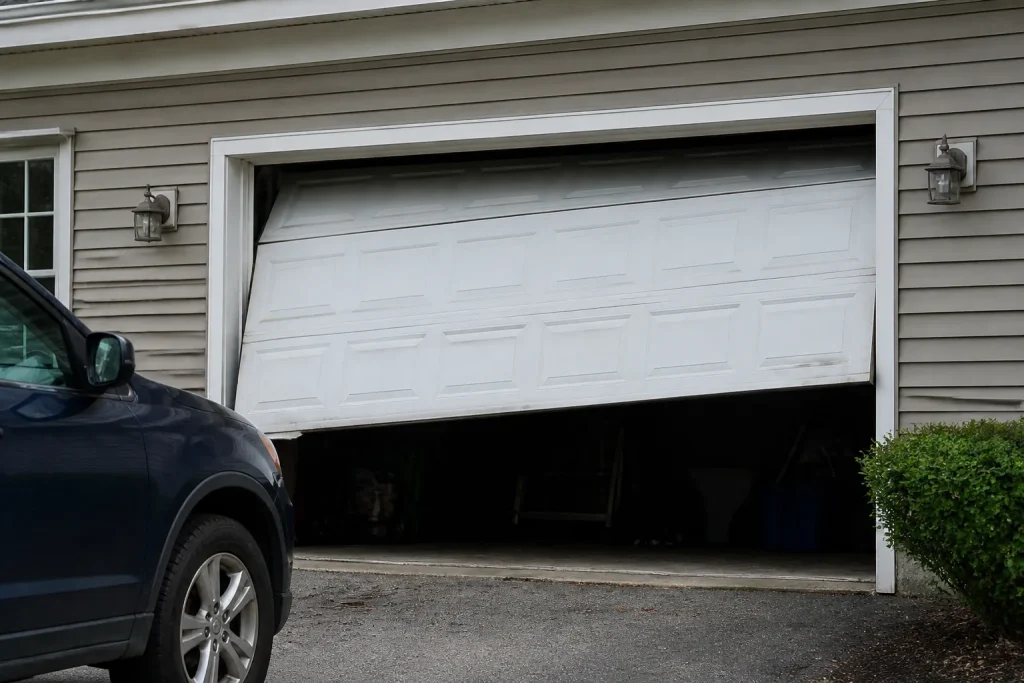
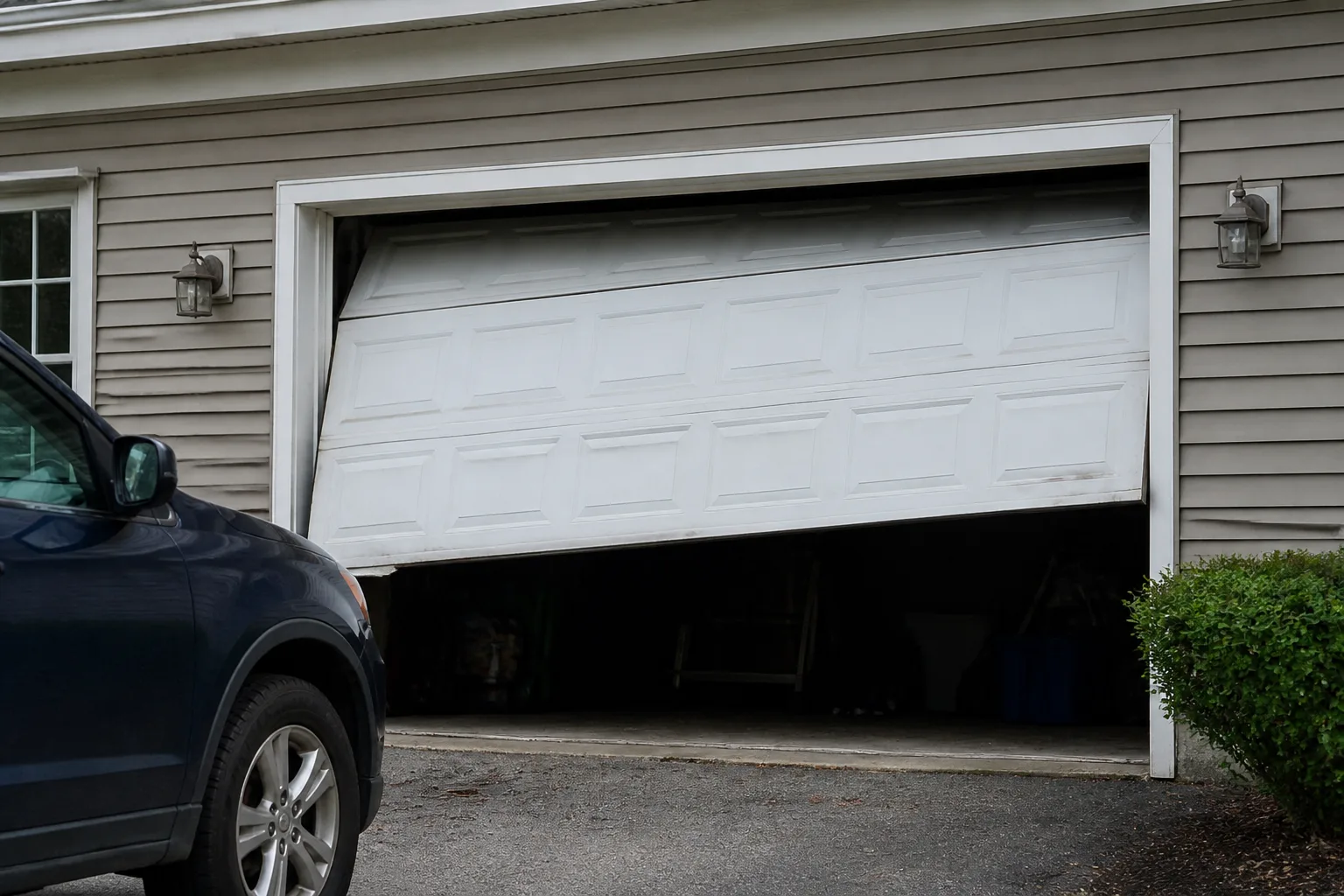
When one side of the door sits lower than the other, or the door rises crooked and drags against the track, most homeowners assume the opener is on its way out. That’s rarely the case. Uneven travel is almost always a sign that the two sides aren’t lifting with equal force, and that points to a cable that’s slipped or a spring that’s lost tension on one side.
Why the misdiagnosis matters: replacing an opener won’t fix a door that’s out of balance. The new motor will work harder to fight the drag, wear out faster, and the door will still hang crooked. In our experience around Bridgeport, a lopsided door is one of the most common things a homeowner describes as “an opener problem” when the real issue lives in the spring and cable system above.
What you’ll notice when this is happening:
- The door looks visibly slanted when it’s partway up
- One side of the bottom panel touches the floor before the other
- The door shudders or jerks as it rises, more on one side than the other
- The gap along the top or side changes as the door moves
Cables and springs are under heavy tension, and this isn’t a repair to take on yourself. Springs and cables are the most dangerous parts of the whole system. If your door in Bridgeport is moving unevenly, that’s the moment to bring in a trained technician.
The Sounds That Tell You Which Part Is Failing
A garage door makes noise, but the type of noise narrows down the failing component fast. Listen closely next time you open it, and match what you hear to the list below.
- Grinding: Usually metal on metal. Often dry or worn rollers, a bent track, or a torsion bar that needs lubrication. Left alone, the friction wears down the parts it touches.
- Popping or snapping: This one deserves attention right away. A pop can mean a spring is cracking or a cable is jumping its drum. Stop using the door and get it looked at before it fails completely.
- Squealing: Typically a lubrication issue in the rollers, hinges, or the opener’s chain or belt. Cheap to fix early, more expensive if the friction chews through the parts.
- Rattling: Loose hardware, a worn hinge, or panels that have worked themselves out of alignment.
We hear these sounds across every brand we work on, from Wayne Dalton doors to Genie and LiftMaster openers. A trained ear turns a vague “it sounds bad” into a specific part, which is what keeps a small repair from becoming a full replacement. If your door is making a sound you can’t place, that’s a good sign it’s time for garage door repair rather than another week of waiting.
The 30-Second Balance Test That Tells You About Your Springs
You can check whether your springs are losing tension without touching a tool. Here’s how it works, and it’s safe to do.
- Close the door and pull the manual release cord so the opener disconnects. The door is now on its own.
- Lift the door by hand to about halfway up.
- Let go and watch. A healthy door should hold roughly where you left it.
- If it drifts down, slides up on its own, or feels heavy to lift, the springs aren’t holding the door’s weight the way they should.
A door that won’t stay put is one that’s now forcing the opener to drag it up and down, and that strain adds up on the motor over time. This is exactly the kind of early signal that homeowners rationalize away for months. If your door fails this test in Bridgeport, don’t try to adjust the springs yourself. They’re under extreme tension and can cause serious injury. That’s a job for a trained tech, and it’s why we treat spring repair as its own specialty. If the balance test points to a spring problem, our garage door spring repair page covers what a repair involves.
Why a Door That Reverses Before Hitting the Floor Is a Safety Issue
If your door goes down, stops, and goes back up before it reaches the floor, the safety sensors aren’t working the way they should. Connecticut requires that reversing mechanism to function, and it’s there for a reason: it’s what stops the door from coming down on a child, a pet, or a car. A door that reverses early is a door that may not reverse when something is actually in the way.
The usual culprits are misaligned sensors, a dirty lens, or a loose wire. On the back of most openers, including Chamberlain and Craftsman units, there’s an indicator light that tells you whether the sensors are aligned. Check that first. If the light is off or blinking and the door still reverses, the problem may be in the sensor wiring or the opener’s logic board, and that’s where a diagnosis saves time.
Don’t put this one off. A door that doesn’t reverse correctly is a genuine hazard, and it’s a sign you need service now, not next month. Same-day repair is often possible for sensor issues around Bridgeport. A quick look at garage door opener repair explains the electronic side of the system if the door is otherwise moving fine.
The Weather Stripping Connection Most Homeowners Miss
Look at the rubber strip along the bottom of your door. If it’s cracked, torn, or flattened so it doesn’t touch the floor, you’ve found a sign that’s easy to ignore and matters more than it looks. A worn seal lets drafts, water, and pests in, but it also changes how the door sits and closes. The opener keeps pushing to get a tight seal that the worn strip can’t provide, and that extra effort wears the motor and the door’s hardware.
This is the connection most homeowners never make. A failing seal in Bridgeport winters means cold air finds its way into the garage, and the added closing pressure shortens the life of the opener. A torn bottom seal is cheap to replace and worth checking any time you notice weather getting in. It’s one of the small things that, left alone, turns into a bigger repair on the electronic side.
When to Call a Pro
Some signs reward patience. A squeak you can lubricate, a seal you can swap, a sensor lens you can wipe clean. Others don’t. If the door won’t stay up in the balance test, if you hear popping from the springs, if it moves unevenly, or if it fails to reverse, stop using it and get a trained tech out. Springs and cables can cause serious injury, and a door that’s fighting its own weight is stressing the opener every time it runs.
If you’d rather not diagnose it yourself, we work on everything from a stubborn Clopay door to a fussy Genie opener. Call (844) 647-0405. We answer 24/7, with fast dispatch from 7am to 7pm, Sunday through Friday. If the door is stuck, we also offer emergency garage door service and same-day repair when the situation calls for it.
Related services in Bridgeport: whether it’s a spring, a sensor, or a motor, we handle garage door repair and the opener side in one place. If your door is beyond repair, we also handle full installation.
The Bottom Line
Most garage door failures give warning first. A door that moves crooked, a new grinding sound, a door that won’t stay put in the balance test, a safety sensor that reverses early, or weather stripping that’s given up are all signals worth acting on before they become a call you make in a hurry. Catching them early usually means a smaller repair and a longer life for the opener. We service eight major brands, from Amarr doors to Chamberlain and LiftMaster openers, so we recognize the equipment you have and diagnose it without guesswork.
If you’re in Bridgeport and need help, Bridgeport Garage Door Repair Pros offers free estimates. Call (844) 647-0405 and we’ll help you figure out what’s worth fixing now.
Frequently Asked Questions
The earliest signs are usually uneven movement, a new grinding or popping sound, a door that takes longer to respond, and a door that won’t hold position in a manual balance test. Any one of these is worth a look. Call (844) 647-0405 for a free estimate.
Do the 30-second balance test: disconnect the opener, lift the door halfway, and let go. A healthy door holds its position. One that drifts down or feels heavy to lift has springs losing tension. Don’t adjust the springs yourself; they’re under extreme tension. Call a trained technician for garage door spring repair.
Not always. Squealing from dry rollers or a chain is usually a lubrication issue. But popping or snapping can mean a spring is cracking or a cable is slipping, and that’s a stop-using-it-now problem. Get it checked before it fails. Reach us at (844) 647-0405.
That’s a safety sensor issue. The reversing mechanism isn’t working the way it should, and Connecticut requires it to function. Check the sensor alignment and lens first; if it still reverses, the wiring or opener logic may need repair. It’s a genuine hazard, so don’t put it off. Call (844) 647-0405 rather than living with it.
Call when the door moves unevenly, won’t stay up in the balance test, makes popping sounds, or fails to reverse. Waiting stresses the opener and risks injury. In Bridgeport, we offer same-day repair and free estimates. Call (844) 647-0405 for a free estimate.
Written by the team at Bridgeport Garage Door Repair Pros.
Need Garage Door Help?
Call Bridgeport Garage Door Repair Pros - the local pro we connect you with is licensed and insured, here with fast help in Bridgeport.
(844) 647-0405